
Designing an AI-Powered Learning Experience
Evolving a course platform into an adaptive, AI-driven system
CONTEXT
First Mover R&D
First Mover R&D Labs is an AI-powered learning platform for founders and business owners, offering execution-focused education through courses, membership access, community engagement, and AI-driven learning experiences. The platform is built to help busy operators learn faster, apply insights immediately, and stay consistent over time.
MY ROLE
Product Consultant
UX/UI Designer
Design Strategy
Visual Design
Design System
Ideation
Agile Workflow
Prototyping
Information Architecture
I joined First Mover as a contract Product & UX Designer to reimagine the end-to-end learning journey, and quickly expanded into optimizing the entire platform experience including membership, purchasing, point systems, community engagement, and AI workflows as the product outgrew its original structure. I also built multi-site web experiences and designed marketing assets and book materials to align brand, conversion, and product strategy.
Clarify and redesign fragmented product flows
Build scalable UI/UX foundations
Translate business strategy into interfaces
Integrate AI into the user journey
01 Problem & Challenge
Users had access to everything, but no clear starting point
When I joined First Mover R&D Labs, the founder had already begun expanding the platform through new features and content offerings. But even as the product became more capable, one issue remained consistent: users were still unclear about what to do when they first entered the Labs.
The platform offered courses, community spaces, live training, and additional tools, but it did not yet define how users should move through them. From the founder’s perspective, this created confusion at the point of entry. From my perspective as a design consultant, it pointed to a larger structural problem: the product had useful surfaces, but no clear learning flow.
The challenge was not to reduce functionality, but to introduce direction. The system needed to guide users into a meaningful starting point without limiting the flexibility of the broader platform.
The strategic question became:
How might we transform a content-rich platform into a system that actively guides users through learning?
02 Opportunity
A trusted brand with the foundations for guided learning
What made this problem especially worth solving was that the platform already had strong underlying value.
First Mover R&D Labs had a solid content engine, a growing product ecosystem, and a loyal audience built around Julia McCoy’s personal brand. That trust mattered. It meant the platform did not need to convince users that the content was valuable. Instead, the opportunity was to make that value easier to access and easier to act on.
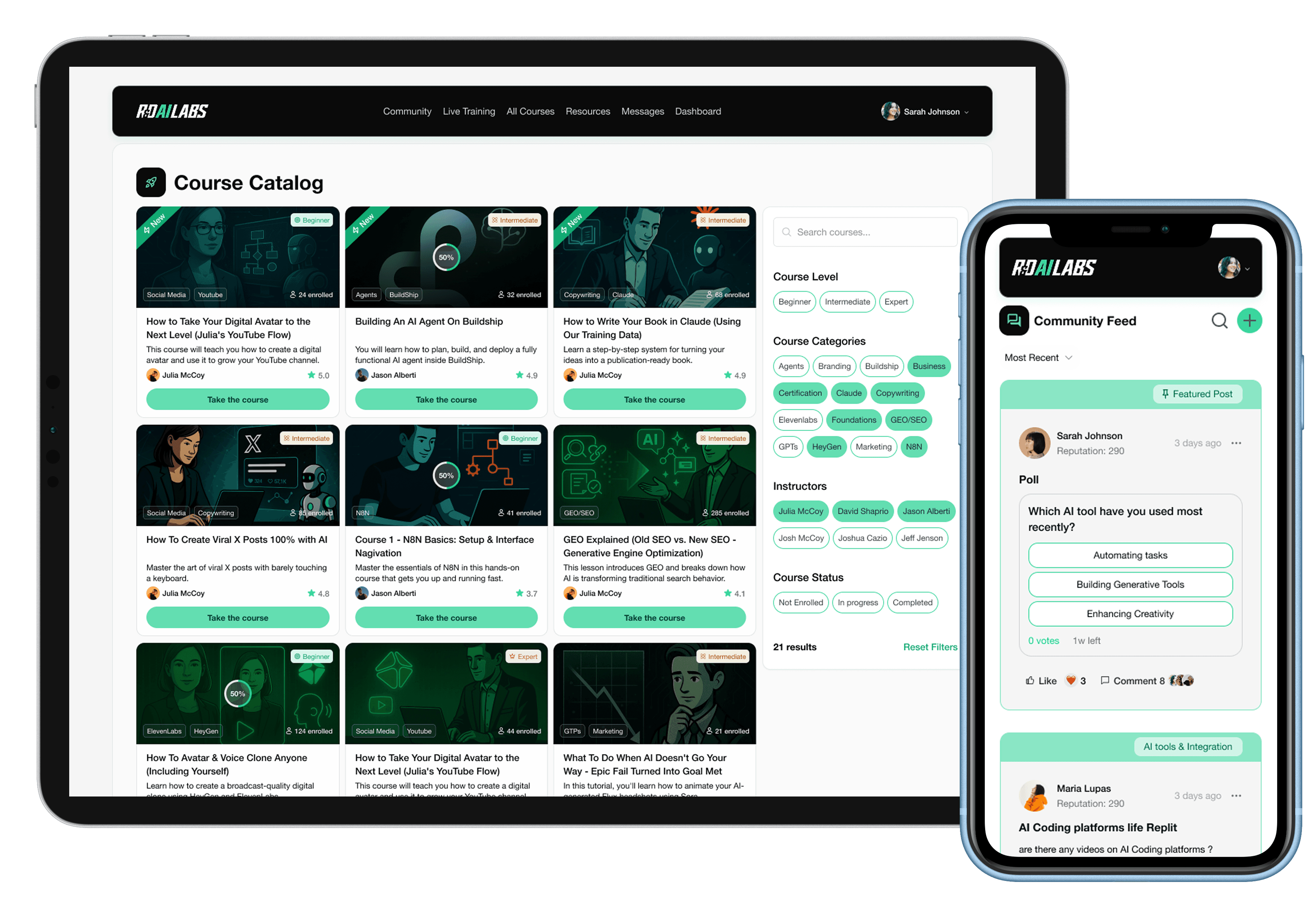
In the early phase of my work, I contributed to multiple product improvements across the platform, including redesigning the dashboard, improving the course catalog with filters and stronger visual hierarchy, creating a more flexible checkout flow for non-subscribed users, restructuring the community feed, and supporting new engagement systems such as points and rankings.
These improvements made the product more complete, but they also made one thing more visible: adding more features did not automatically make the experience clearer.
That realization clarified the opportunity. The platform did not just need more capabilities. It needed a product layer that could connect content, entry, and progression into a more guided system.
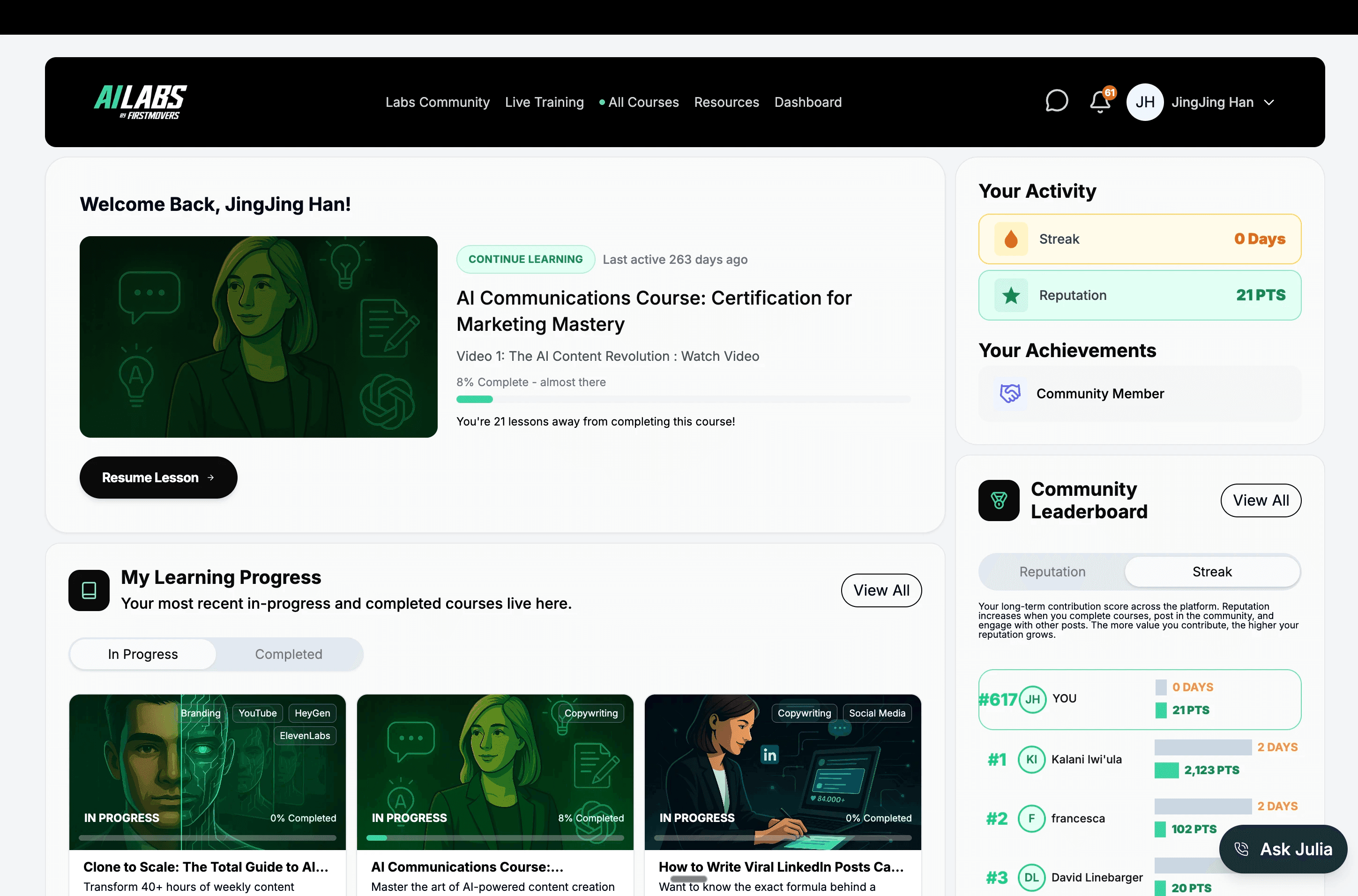
Redesigned Dashboard
03 Designing Onboarding
Defining onboarding and Ask Julia as two parts of the same solution
From there, I broke the problem into two stages: entry and continuation.
The first question was how to help users begin. The second was how to support them once they were inside. This framing helped me avoid treating the issue as a single-screen redesign and instead think about it as a flow problem.
For onboarding, I started by looking at the structured information already available in the course catalog. Each course had metadata such as title, summary, instructor, duration, course type, category, and difficulty level. That gave me the basis for recommendation logic. I then defined a set of questions that could help the system match users with the right starting point. These questions focused on their familiarity with AI tools, what they wanted to achieve, how they planned to use AI, how much time they wanted to invest, and what kind of learning format suited them best.
The purpose of these questions was not to create a heavy assessment, but to gather only the inputs necessary to reduce decision-making. Once users completed onboarding, they landed on a dashboard with recommended courses already matched to their goals and background.

Onboarding Flow
In parallel, I worked on defining Ask Julia. Early on, the feature was still broad in scope. One direction was to position it as a navigation tool, helping users find parts of the platform. But I decided that navigation alone did not justify an AI feature. That problem could be addressed more directly through interface design.
Instead, I reframed Ask Julia as a learning companion. Rather than helping users find content, it would help them think through content, clarify course material, and engage more deeply with their own business ideas. This direction made better use of Julia’s role as a trusted figure and positioned the feature as a more meaningful extension of the platform.
I also made deliberate scoping decisions around the interaction model. While voice and avatar-based concepts were explored, I prioritized a simpler text-first approach with optional audio support. I chose consistency over complexity, defining Ask Julia as a general assistant with a learning-oriented purpose rather than a highly contextual feature that behaves differently on every page.
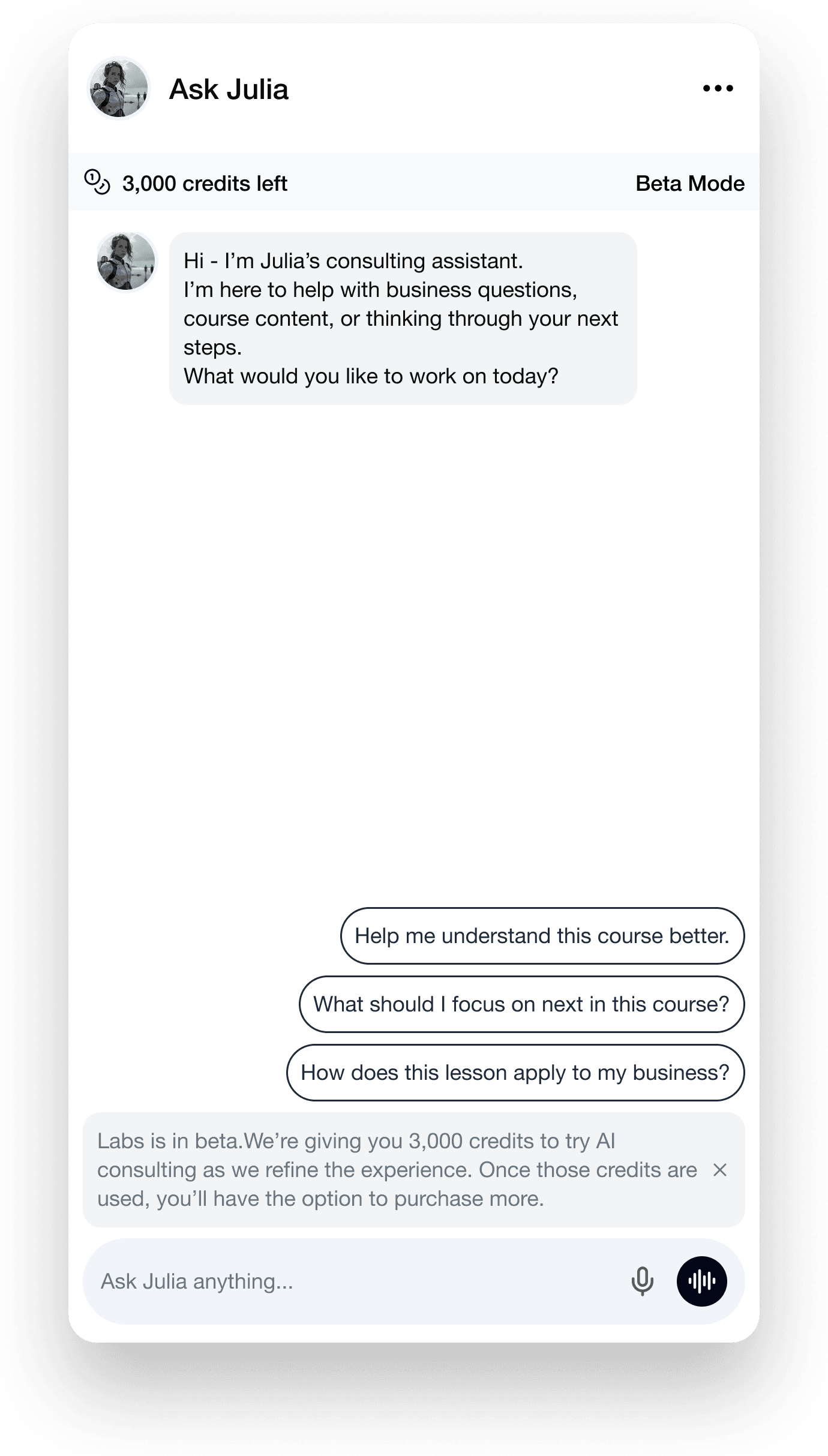
Default Chat View
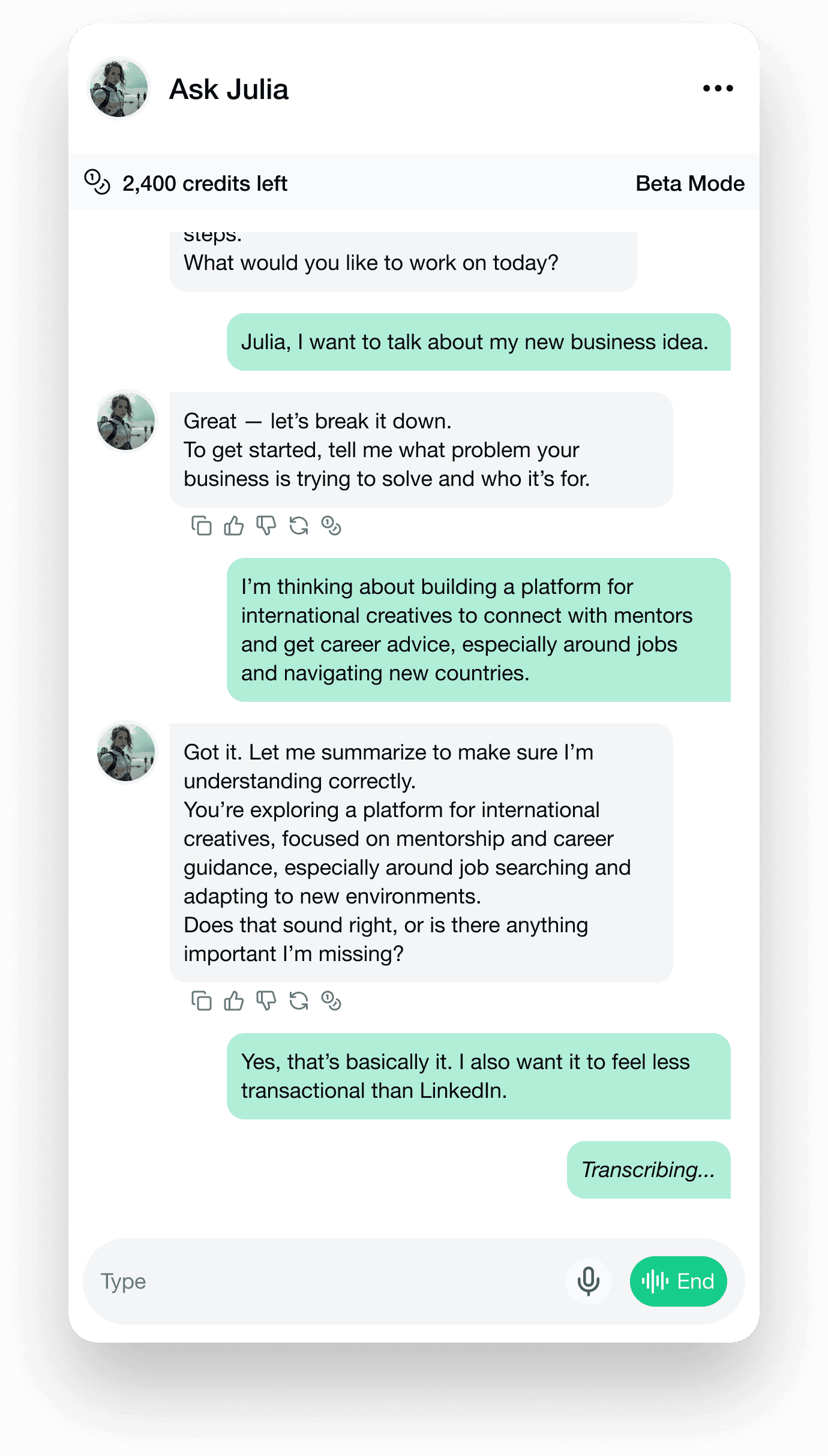
Ongoing Audio Chat
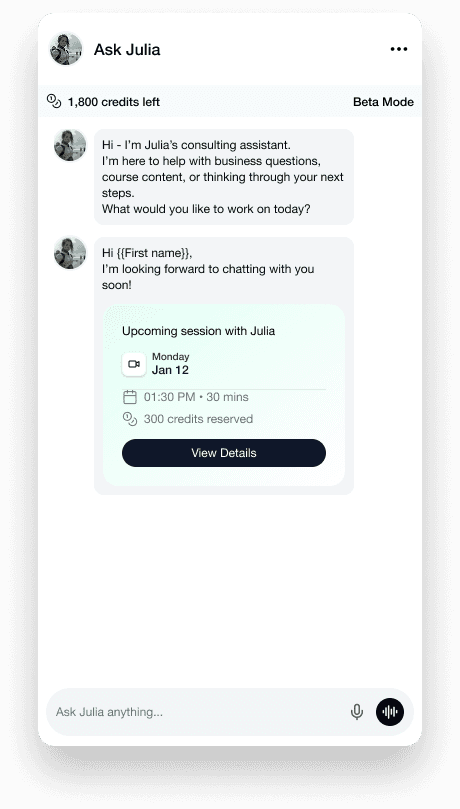
Video Call Schedule confirmation
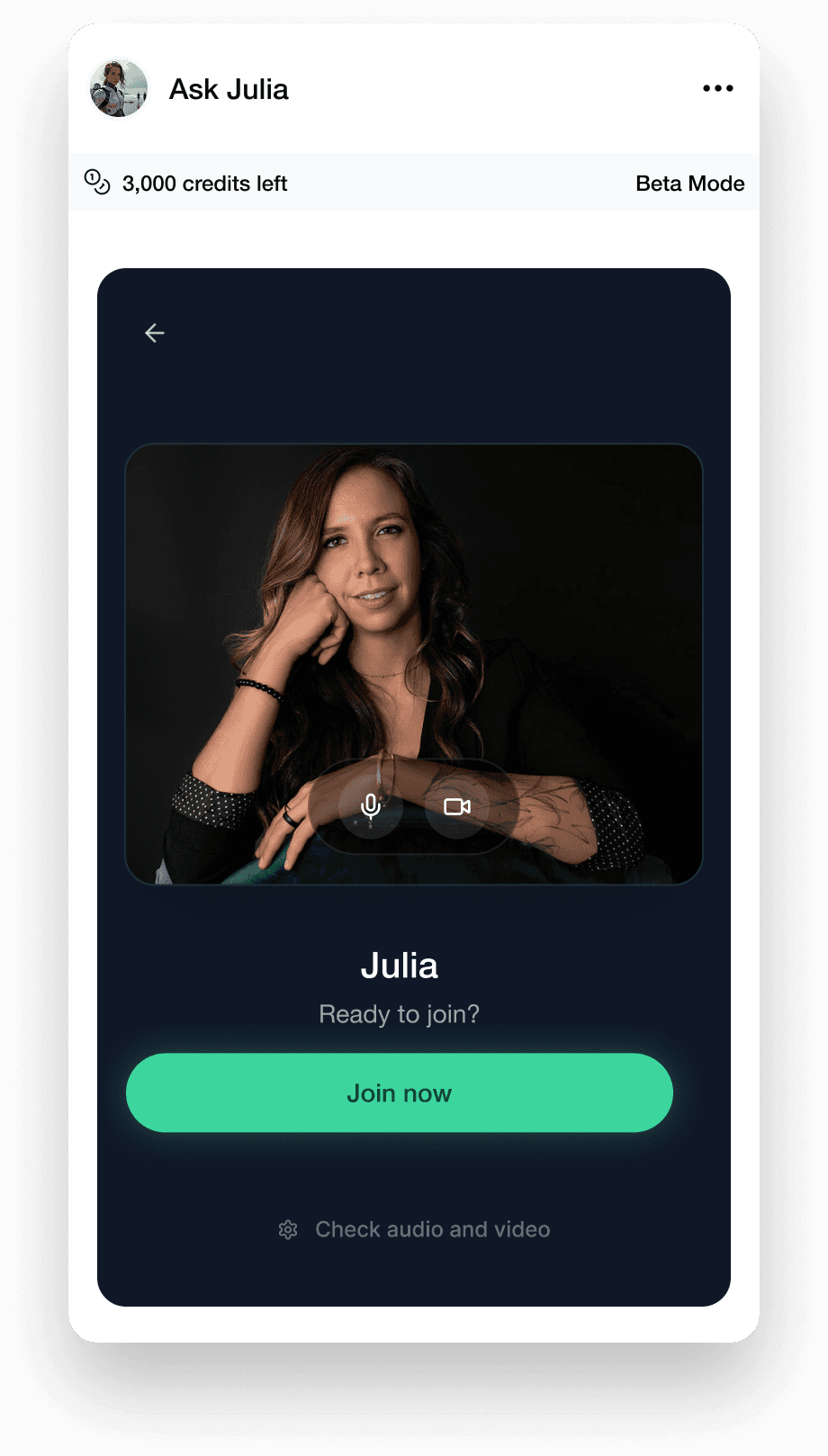
Join the Video Call
Together, onboarding and Ask Julia created two connected layers of guidance: one to define the starting point, and one to support the path that follows.
06 Reflection & Feedback
Designing Through Structure and Decision-Making
This project reinforced the importance of structuring problems before designing solutions.
The initial issue—users being unsure what to do—could have been addressed at a surface level. Instead, I approached it as a system problem and introduced a framework that defines how users enter and move through the product.
The key decisions were not about visuals, but about scope, role definition, and prioritization.
If I were to approach this again, I would explore deeper integration between onboarding outputs and Ask Julia interactions earlier, creating a tighter feedback loop between entry and continuation.
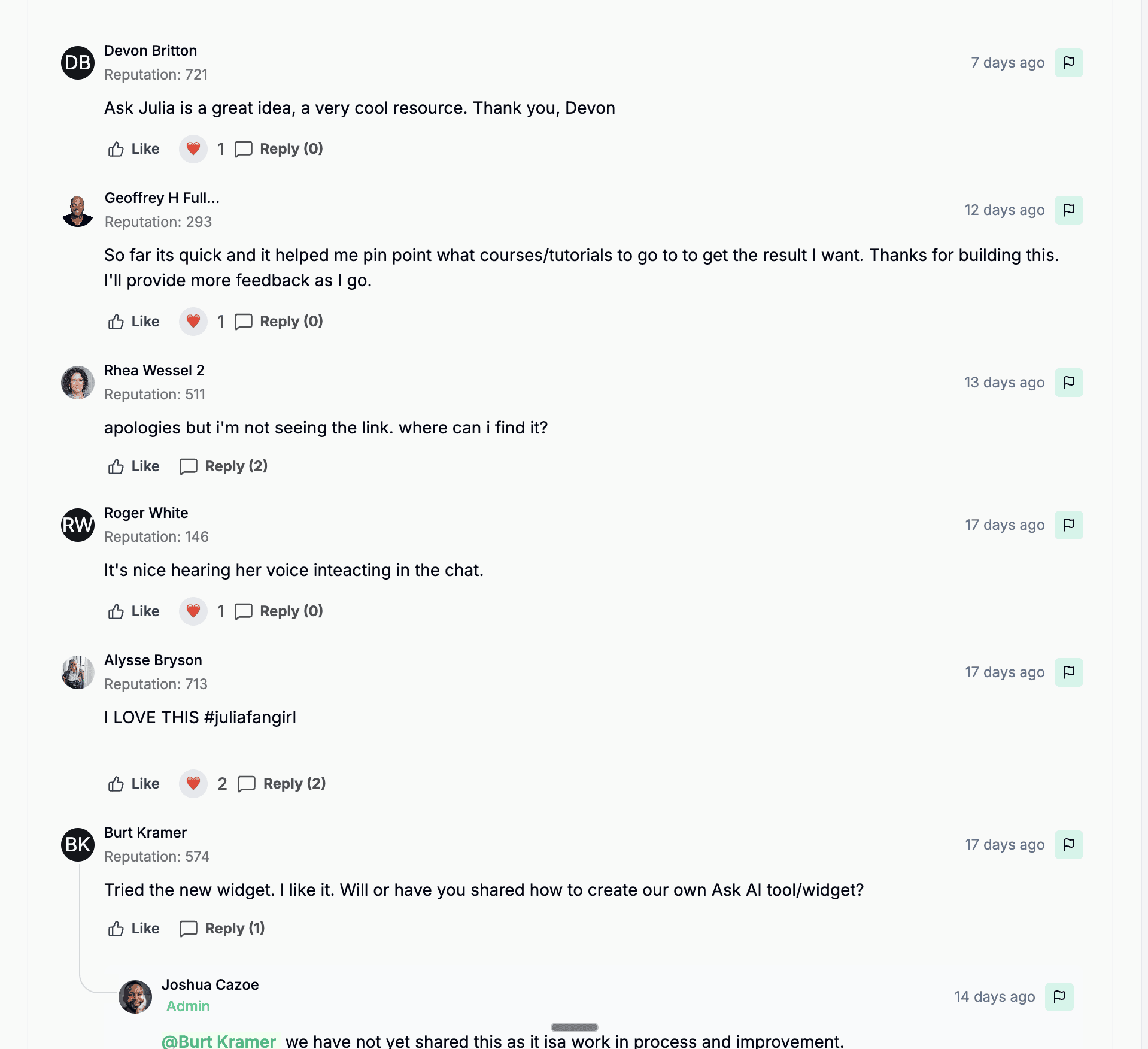
Feedbacks from users: